projects / Personal
Worldline Knot · 命运石扭结
A hardware game about two characters moving through opposing timelines. Physical input, worldline state, and VGA graphics turn a time-travel idea into a digital system.
A meeting across worldlines
Worldline Knot (命运石扭结) is a personal digital-logic mini-game inspired by the time-travel ideas of Steins;Gate and the temporal puzzles of Braid. Two characters move through opposing temporal directions; the player switches perspective and changes movement to bring their worldlines together.
The project explores a small but demanding interaction: the character outside the player's current viewpoint keeps moving. A decision in one perspective changes the situation encountered in the other.
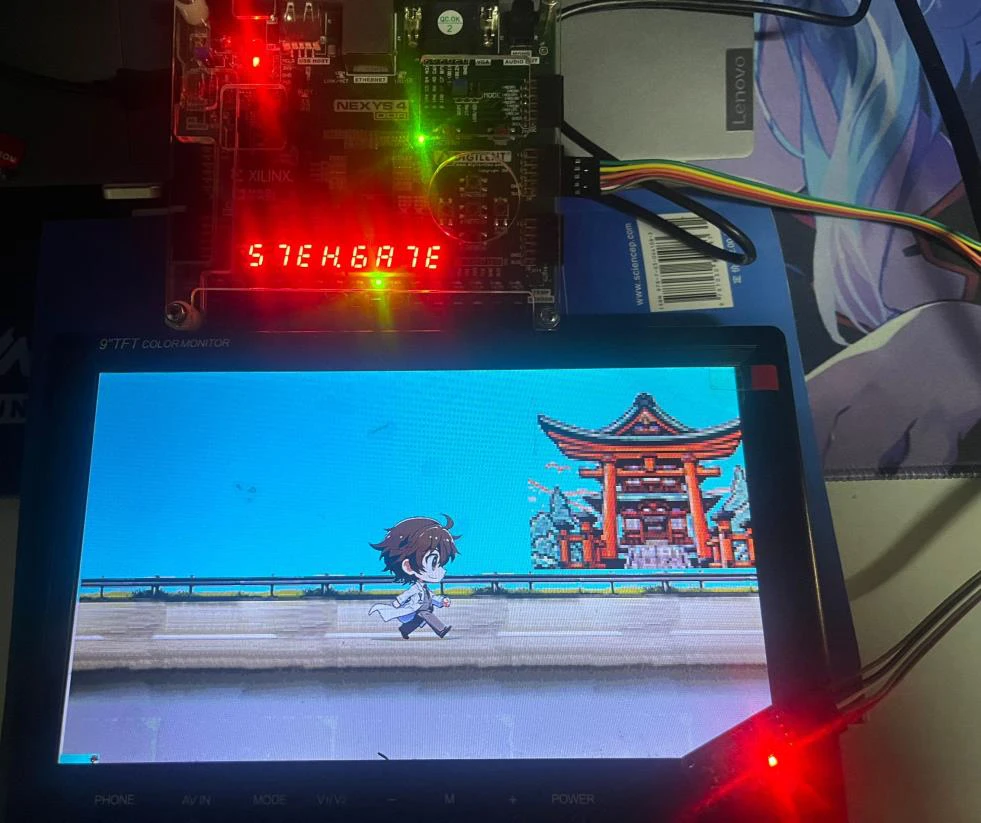
On the VGA display
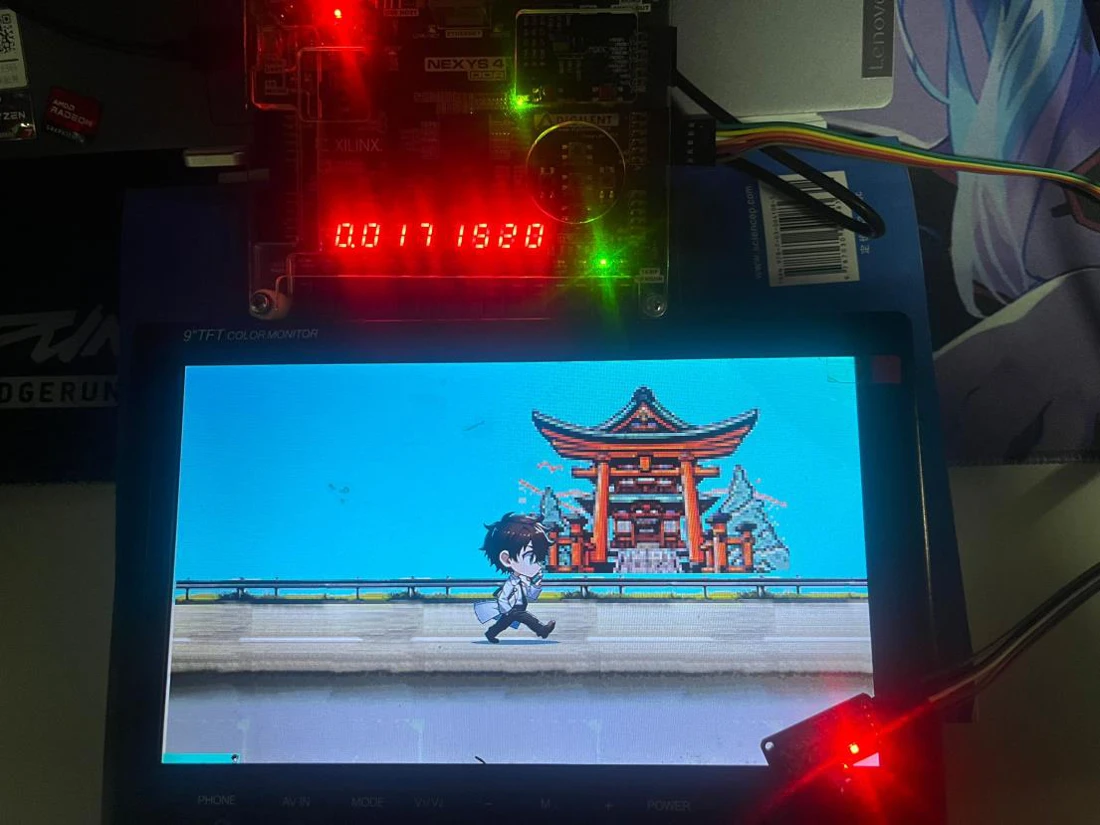
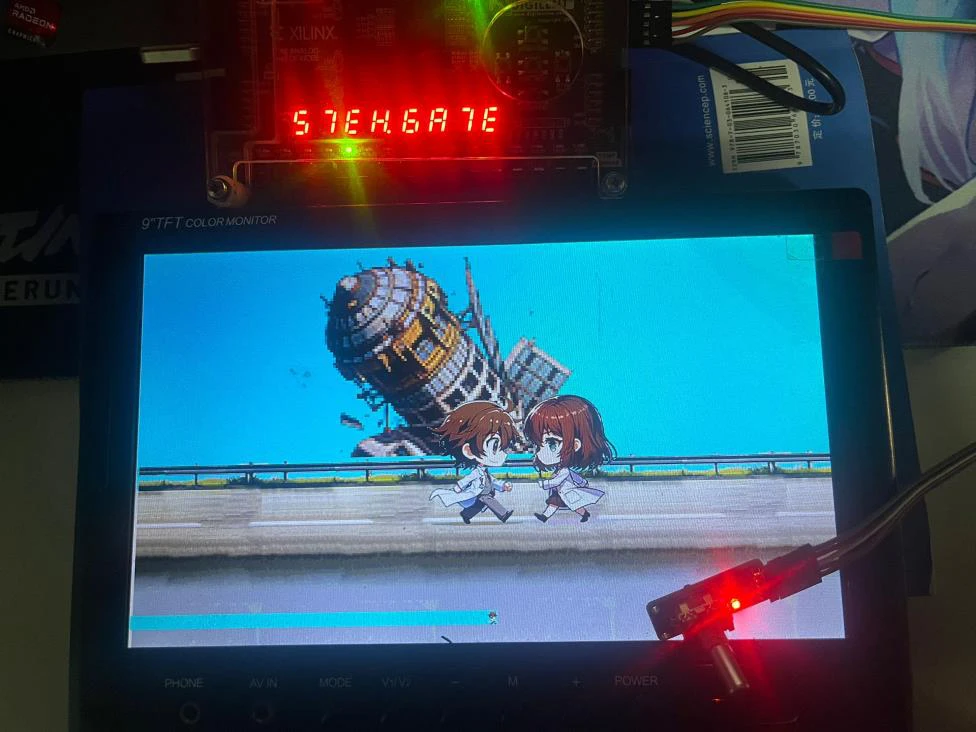
These photographs document the game running with its FPGA board and VGA display. They show a change of character viewpoint and a test in which both characters appear together. The hardware and display remain visible to preserve the context of the original demonstration.
From interaction to hardware
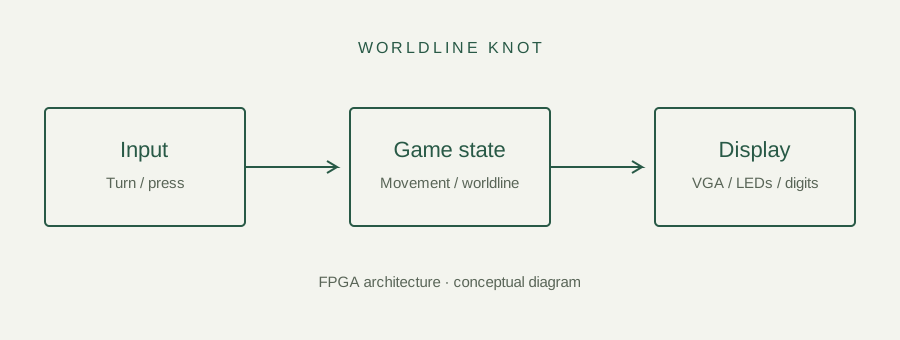
The design uses rotary input for movement and a press to switch perspective. The hardware implementation separates input processing, game logic, control state, and display output. VGA supplies the visual scene, while LEDs and a seven-segment display expose additional game state.
In the repository, the top-level Gate0_top module connects the controller, meet_logic, digit display, and VGA output. Frame synchronization links the game update to the display pipeline. Sprite ROMs and layered graphics make the visual design a hardware resource problem as well as an interaction problem.
Explore the implementation
The linked repository contains Verilog modules and Vivado project files. This is a hardware project showcase; a browser-playable build is not available here. Running the original requires a compatible FPGA setup and the associated toolchain. A web adaptation would require a new input and rendering implementation, plus a review of the original media assets.
This is an unofficial fan-inspired project, not an official Steins;Gate game. Selected photographs from my project report document the hardware demonstration; the game imagery visible within them belongs to its respective rights holders. No standalone franchise artwork or music is distributed here.